Diagnostic Mindset When manual therapists refuse to guess
Chronic pain sufferers often relate to having “tried everything” in their search for relief. Some will report having walked into a typical clinical appointment, where the process often feels like a foregone conclusion.
You point to where it hurts, and the practitioner applies a treatment to that spot.
Apex Soft Tissue & Spine was founded to take a fundamentally different approach. We call it the Diagnostic Mindset. With our approach, the first appointment isn’t just a chance to start treatment; it’s a deep-dive investigation. We believe that chronic pain is a puzzle that requires a high level of curiosity to solve. Here is what that means for you.
Treatment is the Result, Not the Starting Point
Many patients come to us after trying everything — massage, stretching, heat packs, or strengthening exercises — with little to no long-term success. Usually, this is because those treatments were aimed at the symptom rather than the source.
Our diagnostic mindset flips this script. We don’t start with a “technique”; we start with questions and a curiosity to unpack the details.
Clinical Curiosity: Looking Beyond the “Where”
If your lower back hurts, we aren’t just applying a generic treatment to WHERE it hurts. We start with a clinical curiosity, to find out WHY you have the pain.
1️⃣ Detailed history: Our intake process gathers important information to start forming a diagnostic opinion
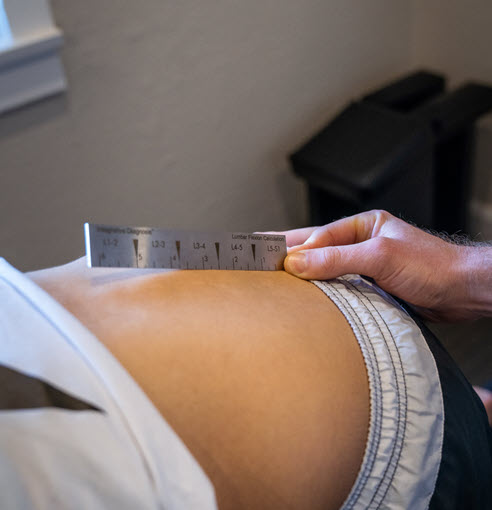
2️⃣ Comprehensive examination: Our clinical evaluation uses a series of tests and hands-on palpation to investigate the history and confirm the diagnosis.
3️⃣ Pre & Post treatment testing: Where possible, we use pre & post-treatment testing to observe changes and track progress. We don’t just rely solely on the presence or absence of pain.
A diagnostic mindset requires the practitioner to be a detective. It means being humble enough to realise that the body is complex and curious enough to keep digging until the patterns make sense.
Why We Explain the “Why”
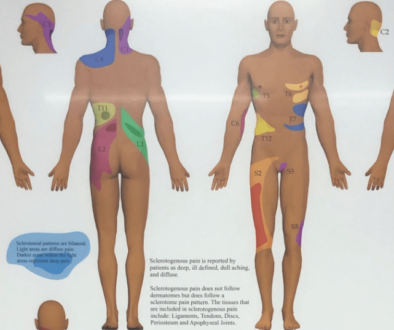
We believe its important to explain what we are doing and why we are doing it. We will explain the anatomy, show you the maps of the body, and discuss our plan.
We do this because a diagnostic mindset is collaborative. When you understand the “why” behind your pain, your brain feels safer. You stop feeling like your body is “broken” and start seeing it as a system that needs specific, logical input to heal.
Precision Over Pressure
In the world of manual therapy, there is sometimes a belief that “more pressure equals better results.” If it hurts, it must be doing something good.
We disagree. More is not better. BETTER IS BETTER! It’s true, that some aspects of treatment can be uncomfortable and even painful at times. However, treatment does not need to hurt to be effective.
By adopting a diagnostic mindset, we ensure our care is precise. When we understand the underlying anatomy—whether it’s a peripheral nerve entrapment or a deep ligamentous tissue—we can use exactly the right amount of force in exactly the right place.
Summary
If you are a dedicated, detail-oriented person, you likely want a clinician who matches that energy. You are not seeking a “quick fix” that fades by the time you get to the car. You need provider with a diagnostic mindset and a strategy to provide a clear path forward.
If you, or anyone that you know is suffering with chronic pain that won’t go away despite everything you’ve tried so far, please consider scheduling an Initial Consultation (link below on this page).
Dr. Christopher Aysom, Principal Clinician
BChiroSc, MChiro (Chiropractor)
Apex Soft Tissue & Spine
Pymble, NSW, Australia
https://apexsofttissue.com.au